
Best Eyeliner Brush for Beginners: A 2026 Guide to Precision Tools
A sharp winged liner depends more on tool geometry than a steady hand. Symmetry issues and jagged lines are common frustrations when searching for the best eyeliner brush for beginners. It's difficult to maintain control when a brush is too soft or the shape is poorly defined. You likely want a clean, sharp wing without the stress of constant corrections. Most beginners struggle because they use tools that lack the necessary structural integrity for fine work.
Selecting the right tool transforms the application process from a daily struggle into a predictable routine. This 2026 guide identifies the most effective tool shapes, including the high-precision blade eyeliner brush and symmetric seal tools. We break down which synthetic fiber tools work best with gel or powder formulas to help you achieve professional results every time. This technical overview focuses on utility and precision for an efficient, uncomplicated experience. It provides the necessary details to find a durable, functional tool that compensates for shaky hands and provides immediate clarity in your makeup kit.
Key Takeaways
- Prioritize high bristle stiffness to ensure tool stability and prevent the jagged lines common with soft, low-quality fibers.
- Identify the best eyeliner brush for beginners by selecting ultra-thin "Blade" geometry optimized for stamping sharp, precise wings.
- Match your tool to your formula, using rigid, short bristles for gel pots and damp angled brushes for smoky powder applications.
- Implement the stamping and "Connect-the-dots" techniques to achieve professional symmetry without requiring a perfectly steady hand.
- Evaluate tool quality based on bristle "snap" and technical construction to ensure consistent, long-term performance and precision.
Understanding What Makes the Best Eyeliner Brush for Beginners
A beginner eyeliner brush is a technical tool designed for maximum stability and predictable pigment release. Unlike professional brushes that require a light touch, the best eyeliner brush for beginners provides physical resistance against the skin. This resistance ensures that the tool doesn't "flip" or stray from the intended path. Bristle stiffness is the primary factor in achieving a clean line. Soft bristles often bend unexpectedly, leading to the jagged edges and symmetry issues that many beginners experience. A stiff brush head allows for a stamping motion, which is far more reliable than a continuous sweeping stroke for those with shaky hands.
The ferrule, the metal component connecting the bristles to the handle, plays a critical role in long-term performance. A high-quality ferrule is double-crimped to maintain the brush head's precise shape. If a ferrule is weak, the bristles will splay over time, ruining the fine point necessary for sharp wings. Selecting the best eyeliner brush for beginners requires attention to this mechanical detail. For those using gel or cream formulas, synthetic fibers are the industry standard. Natural hair is porous and absorbs product, which leads to clumping and uneven application. Synthetic bristles are non-porous, ensuring that every bit of pigment is transferred to the eyelid rather than trapped in the brush.
Synthetic Fibers vs. Natural Hair
Synthetic fibers offer superior performance for liquid and gel eyeliner formulas. These non-porous strands don't soak up moisture, making them easier to clean and more hygienic for the sensitive eye area. High-density synthetic heads provide better snap. This means the bristles return to their original position immediately after each stroke. This mechanical snap gives the user more control over the line's thickness and direction. This material choice is essential for maintaining a sharp edge throughout the day without the tool losing its structural integrity.
Handle Ergonomics and Tool Weight
Handle length dictates how close you can get to the mirror. Short handles are often preferred for high-precision work because they don't hit the glass during application. Tool weight is equally important. A weighted ferrule shifts the center of gravity toward the brush head, which helps steady a shaky hand. Choosing a handle with a matte or textured finish prevents slipping, especially during detailed wing construction. Functional tools like the Blade eyeliner brush prioritize these ergonomic details to ensure a reliable user experience and professional-grade results.
Top 3 Eyeliner Brush Shapes for Easy Application
Fine-point brushes are often marketed as the industry standard, but they're frequently the most difficult tools for novices to master. These brushes require significant pressure control and a perfectly steady hand to avoid uneven thickness. Without a broad base for stability, the fine tip can wobble, creating a jagged line. For those seeking the best eyeliner brush for beginners, three specific shapes offer a mechanical advantage: the blade, the angled definer, and the flat definer.
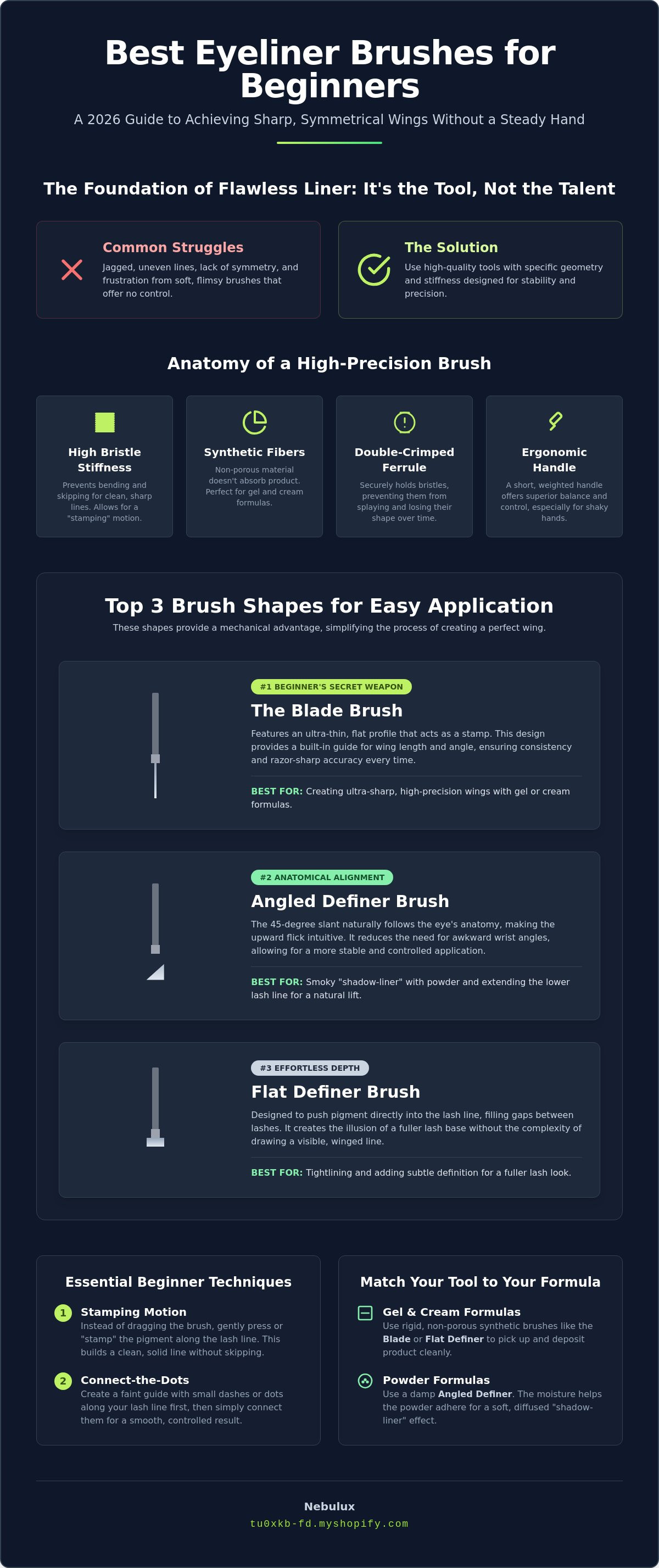
The Blade eyeliner brush is the modern standard for stamping sharp lines. Its thin profile allows users to press pigment directly onto the lash line instead of drawing a continuous, risky stroke. The angled definer is best for following the natural lower lash line to create wings. It aligns with the eye's anatomy, making the upward flick intuitive. Finally, the flat definer is ideal for tightlining. It allows you to push pigment into the gaps between lashes for a fuller look without a visible line. This tool is essential for creating depth without the complexity of a wing.
The Blade Eyeliner Brush: A Beginner’s Secret Weapon
The blade brush features an ultra-thin, flat profile that mimics a razor edge. This design provides a built-in guide for wing length and angle. By aligning the flat side with the outer corner of the eye, you can create a consistent flick every time. The width of the blade acts as a measurement tool, ensuring both eyes match. High-precision stamping. Ultra-thin profile. Razor-edge accuracy. The Blade eyeliner brush is the most efficient tool for 2026.
Angled Brushes for Anatomical Alignment
Angled brushes use a 45-degree slant to map the flick based on your eye shape. This slant reduces the need for wrist contortion, allowing for a more stable grip. When using powder or "shadow-liner," the angled shape is particularly effective. It picks up pigment evenly and deposits it in a controlled, diffused line. For the best eyeliner brush for beginners, an angled tool provides a reliable way to extend the lower lash line upward. This creates a lifted effect with minimal effort. Dampening the brush before using powder can further increase the precision of this shape.
Selecting the Right Brush for Your Eyeliner Formula
Eyeliner formulas vary in viscosity and drying time. Each requires a specific tool to manage pigment distribution effectively. Gel and cream pots are high-density formulas. They require stiff, short bristles to maintain control. If the bristles are too soft, the thick product will cause the brush head to splay. This leads to uneven application and loss of precision. The best eyeliner brush for beginners working with gel is often a synthetic blade-style tool. It provides the necessary resistance to move thick pigment across the eyelid without bending.
Powder and eyeshadow offer a more forgiving entry point. Using a damp angled brush creates a soft, smoky finish that's easy to correct. The moisture binds the powder, preventing fallout and creating a temporary paste. For liquid liners, a separate brush acts as a refinement tool. Many felt-tip pens lack the necessary fineness for a sharp wing. You can "salvage" a liquid application by picking up product from the pen tip with a precision brush. This allows for a sharper finish than the pen alone can provide.
Brushes for Gel Eyeliner Mastery
Mastering gel requires correct brush loading. Dip the tool into the pot and coat both sides of the bristles. Wipe the excess onto a clean palette or the back of your hand. This step prevents mid-wing skipping. The blade shape is particularly effective here. Its flat profile resists the heavy drag of the gel. Consistent maintenance is vital. Residue buildup ruins the brush's fine edge. Refer to our guide on how to clean eyeliner brush to maintain peak performance and hygiene.
Transitioning from Pencil to Brush-Applied Liner
Pencils are familiar but often lack precision. You can use a flat definer brush to smudge a pencil line into a professional gradient. This creates a "soft-glam" look without the need for a perfect wing. A hybrid approach is also effective. Draw the basic shape with a pencil. Then, use a blade brush to sharpen the outer flick. Powder remains the most forgiving formula for absolute novices. It's easy to blend out if you make a mistake. The best eyeliner brush for beginners using powder is a small, angled tool with enough density to pack pigment tightly against the lashes.
Essential Techniques: How to Use Your New Tools
Mastering the best eyeliner brush for beginners requires shifting from drawing to stamping. Continuous lines are difficult to execute with a shaky hand. The stamping method utilizes the flat side of the brush to deposit pigment in small, overlapping sections. This creates a solid line without the drag that leads to jagged edges. The connect-the-dots strategy involves mapping the wing with tiny pigment points before filling the gaps. This allows for adjustments before the formula sets. For maximum stabilization, rest your pinky finger on your cheek. This anchor point creates a pivot that reduces hand tremors.
The final flick determines the lift of the eye. Place the brush at the outer corner and move it upward toward the tail of the brow. A swift, light flick creates a tapered end. This motion is more effective than trying to draw a triangle manually. Precision tools like the Blade eyeliner brush are specifically designed to facilitate this movement with minimal effort. This technical approach ensures a sharp finish regardless of your experience level.
The Push-and-Pull Method for Tightlining
Tightlining fills the gaps between natural lashes for a denser appearance. Use a flat definer brush to push pigment directly into the lash base. This technique makes lashes look thicker without the "heavy" look of a traditional top-liner. Avoid the waterline to prevent irritation and ensure the product remains on the lash roots. This method provides a subtle, professional-grade definition. It remains an essential technique when using the best eyeliner brush for beginners for those seeking depth without a visible wing.
Symmetry Hacks: The Seal and Blade Combo
Achieving identical wings is a common beginner pain point. Using a seal eyeliner pen sets a symmetric base in seconds. Once the wing is stamped, use a precision blade brush to refine the edges and connect the wing to the lash line. Perform a mirror check by looking straight ahead to ensure both wings sit at the same level. This dual-tool approach eliminates guesswork and guarantees symmetry. Upgrade your toolkit with the Blade eyeliner brush for professional-grade results.
Elevate Your Routine with Nebulux Precision Tools
The best eyeliner brush for beginners is defined by its mechanical advantage. The Nebulux Blade eyeliner brush provides this through a utilitarian design focused on bristle snap and long-term durability. Unlike standard tools that lose their shape after several uses, our precision brush maintains its razor-thin edge. This structural integrity is vital for consistent pigment release and stable application. Combining the Blade brush with the CmaaDU Seal Eyeliner creates a comprehensive kit for achieving symmetric results. This pairing allows you to stamp the base wing and refine the details with professional-grade accuracy. It's a system designed for efficiency and predictable outcomes.
Nebulux focuses on providing functional beauty essentials for the North American market. We prioritize tool efficiency over decorative branding. Every component of our eye makeup tools is selected for its physical properties and intended use. This commitment ensures that even those with shaky hands can achieve a clean, sharp wing. Our products are curated for users who value their time and require reliable hardware. This shop-first mentality means we provide exactly what is needed without unnecessary fluff. The result is a grounded, no-nonsense style that feels professional and focused on the transaction at hand.
Why the Nebulux Blade Brush Wins
The ultra-thin profile of the Blade brush is specifically designed for 2026 makeup trends that favor sharp, graphic lines. High-density synthetic fibers resist clumping, even when paired with heavy waterproof formulas. This non-porous material ensures that pigment sits on the surface of the bristles for immediate transfer to the skin. It's an essential tool for those who find traditional fine-point brushes difficult to control. For a full overview of necessary hardware, consult our reference guide on eye makeup tools for professional results. This resource helps you build a kit that addresses every technical requirement of eye definition.
Final Checklist for Beginner Success
Success with the best eyeliner brush for beginners requires a methodical approach. Follow this checklist to ensure a clean application every time:
- Start with clean brushes: Ensure the fine edge isn't compromised by dried product residue.
- Load carefully: Wipe excess gel or powder to prevent skipping or clumping.
- Anchor your hand: Use your pinky finger as a stabilizer against your cheek.
- Finish with spray: Use a setting spray to lock the pigment in place for all-day wear.
Don't rush the process. Precision takes patience. Allow the formula to set before making minor corrections. If you're ready to upgrade your kit, Shop the Blade Eyeliner Brush at Nebulux for high-precision results and durable performance.
Achieve Precision with Technical Tools
Achieving a sharp wing requires high-precision hardware that compensates for a lack of experience. Tool geometry remains the most significant factor in liner success. High-density synthetic bristles and precision blade geometry provide the necessary resistance for a clean finish. These technical attributes ensure the brush head doesn't splay during application. You'll find that the right tool does the heavy lifting for you. It's a methodical approach to beauty that prioritizes results over decorative fluff.
Selecting the best eyeliner brush for beginners is a strategic investment in your daily routine. Professional-grade tools reduce the time spent on corrections and symmetry issues. Trusted by North American beauty enthusiasts, our catalog focuses on functional utility and durable construction. It's about finding a reliable digital storefront that delivers exactly what you need for consistent performance. This commitment to quality ensures your tools remain functional for years.
Upgrade your kit with the Nebulux Blade Eyeliner Brush for immediate clarity and control. Master your technique with tools designed for stability and accuracy. You can achieve professional results with the right mechanical advantage.
Frequently Asked Questions
What is the easiest eyeliner brush for a beginner to use?
The blade eyeliner brush is the easiest tool for beginners due to its flat, rigid profile. It allows for a stamping motion rather than a drawing motion, which is much easier to control. This shape provides a built-in guide for the angle and length of your wing, reducing the need for manual precision. It's the best eyeliner brush for beginners who struggle with shaky hands or symmetry.
Can I use an angled eyebrow brush for eyeliner?
You can use an angled eyebrow brush for eyeliner if the bristles are sufficiently thin and rigid. However, many eyebrow brushes are wider and softer than tools specifically designed for the eyes. A dedicated eyeliner brush ensures a sharper wing and prevents the fuzzy edge often created by thicker brow tools. If the bristles splay when pressed against the skin, the tool isn't suitable for precision lining.
How do I stop my hand from shaking when applying eyeliner?
Anchor your pinky finger against your cheek to stabilize your hand during application. This pivot point reduces the impact of small tremors and provides a physical guide for the brush. Using a stamping technique instead of a long, sweeping motion also minimizes the visible effects of shaky hands. Resting your elbow on a flat surface while applying product further increases your overall control.
Is a silicone eyeliner brush better than a hair brush?
Synthetic hair brushes are generally superior to silicone versions for high-precision work. While silicone is hygienic and easy to sanitize, it lacks the snap and flexibility required for a tapered wing. High-density synthetic fibers offer better pigment distribution and a sharper edge for modern makeup trends. Silicone tools are often too thick to achieve the ultra-fine point necessary for a professional-grade wing.
How often should a beginner wash their eyeliner brush?
Wash your eyeliner brush after every use when working with gel or liquid formulas. Dried product ruins the fine edge of the bristles and can harbor bacteria near the sensitive eye area. Beginners should maintain a strict cleaning schedule to ensure the best eyeliner brush for beginners performs consistently. Regular maintenance prevents clumping and ensures the tool's geometry remains intact for the next application.
What is the difference between a fine liner and a blade brush?
A fine liner features a single-pointed tip while a blade brush has a flat, wide profile. Fine liners require expert pressure control and a perfectly steady hand to avoid varying line thicknesses. In contrast, the blade brush allows for stamping, making it much easier to achieve symmetric wings. The blade's width acts as a physical template, ensuring both eyes match with minimal effort.
Can you use eyeshadow as eyeliner with the right brush?
Eyeshadow works effectively as eyeliner when applied with a damp angled or blade brush. The moisture turns the powder into a temporary paste that's highly forgiving and easy to blend. This is the most accessible method for those just starting to experiment with winged looks. It allows for a soft, smoky finish that hides minor application errors better than liquid or gel formulas.
Why does my eyeliner look jagged even when using a brush?
Jagged lines often result from using soft bristles or drawing in one continuous motion. If the brush head is too flexible, it will flip and deviate from your intended path. Using a stiff, high-density tool and applying the product in short, overlapping sections will produce a cleaner result. Ensure the brush isn't overloaded with product, as excess formula can cause the bristles to clump and skip.