
Eye Cream vs. Eye Serum: Choosing the Right Under-Eye Treatment in 2026
Spending significant capital on premium eye treatments won't fix dark circles if the molecular structure cannot penetrate your skin barrier. The eye cream vs eye serum choice often determines whether your active ingredients actually reach the target tissue. Most consumers select products based on marketing rather than technical formulation. This leads to a cluttered shelf of ineffective jars and wasted money. You want a routine that works without the guesswork of complex layering. It's frustrating to deal with persistent puffiness after investing in multiple steps that don't deliver.
This article clarifies how viscosity and molecular weight dictate whether an ingredient reaches the dermis or simply seals the epidermis. You'll learn the specific criteria for choosing between lightweight delivery systems and occlusive barriers to reduce fine lines and dark circles effectively. We'll examine the shift toward hybrid serum-creams, the role of multi-peptide blends, and the impact of 2026 EU safety regulations on ingredient transparency. This guide provides a clear, utilitarian framework for building an efficient, results-driven routine focused on technical performance rather than brand narrative.
Key Takeaways
- Identify how molecular weight and base composition define the functional roles of eye cream vs eye serum in a modern skincare routine.
- Understand the biological factors, such as the absence of sebaceous glands, that make the periorbital area susceptible to chronic dehydration and expression lines.
- Select targeted treatments based on specific skincare goals, prioritizing water-based serums for deep repair and oil-based creams for epidermal moisture retention.
- Optimize product efficacy through a strategic application order that focuses on maximizing absorption on damp skin.
- Explore the utility of hybrid polypeptide formulas that combine serum-level active delivery with the protective barrier of a traditional cream.
Understanding Eye Care: Why Specialized Treatments Are Essential
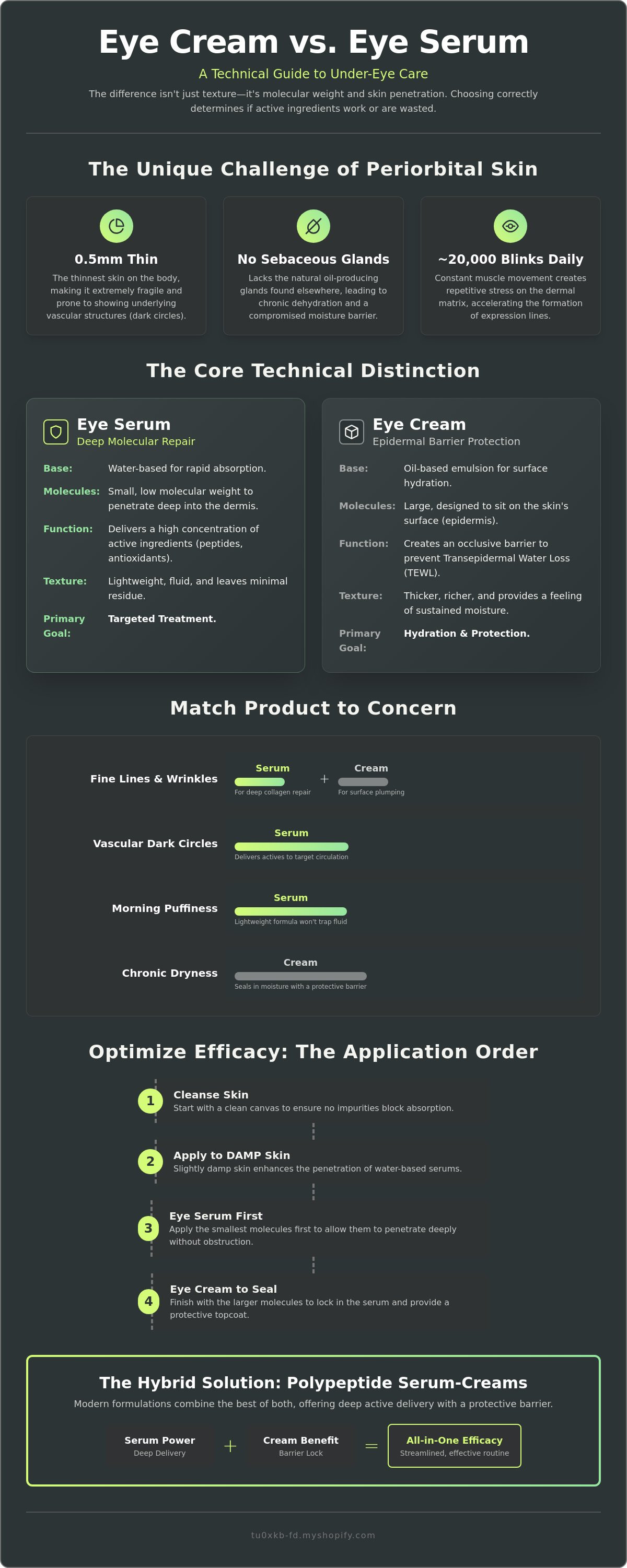
The periorbital area is the thinnest skin on the human body, measuring only about 0.5mm thick. It lacks sebaceous glands, which are the primary source of natural sebum and moisture. This absence leads to chronic dryness and a compromised lipid barrier. Without a consistent moisture source, the skin loses elasticity quickly and develops fine lines. This biological reality makes the eye cream vs eye serum choice critical for maintaining skin health. Standard facial products often contain high concentrations of active ingredients or heavy oils that don't suit this fragile zone. Using specialized treatments ensures that ingredients are delivered in a pH-balanced, non-irritating format designed for ocular safety.
Constant movement also accelerates aging here. We blink approximately 15,000 to 20,000 times per day. This high mobility of eye muscles creates repetitive stress on the dermal matrix, leading to expression lines and crow's feet. Additionally, the skin's translucent nature makes underlying vascular structures visible. This visibility often manifests as blue or purple dark circles. Formulations must be ophthalmologist-tested to prevent stinging or long-term damage to the delicate eye tissues. When evaluating eye cream vs eye serum, consider that serums often provide the concentrated actives needed for vascular issues, while creams address the surface dryness.
The Biology of Under-Eye Skin
A lack of subcutaneous fatty tissue makes the under-eye area prone to sagging and hollowing. Unlike the cheeks or forehead, there is little structural support. This makes the area highly vulnerable to UV damage and oxidative stress from environmental pollutants like ozone and particulate matter. Standard face moisturizers are designed for thicker skin and often contain occlusives like petrolatum or heavy waxes. These can clog the small pores around the eyes, resulting in milia. These small, white keratin cysts are difficult to remove and usually indicate a product is too heavy for the region. Specialized eye products utilize smaller molecules for better absorption without clogging.
Common Concerns: Dark Circles vs. Puffiness
Identifying the root cause of your concern is essential for product selection. Genetic pigmentation appears as brown shadows, while vascular dark circles look blue or purple due to thin skin and poor circulation. Morning puffiness is typically caused by fluid retention in the loose skin tissues, often exacerbated by diet or sleep position. Structural concerns require different ingredients than temporary swelling. Polypeptides target structural collagen loss by acting as chemical messengers that signal the skin to initiate repair and synthesize new protein fibers. This technical approach is more effective than generic hydration for long-term anti-aging results.
Eye Serum vs. Eye Cream: The Technical Differences
The primary distinction in the eye cream vs eye serum debate lies in the base formulation and molecular weight. Serums are typically water-based fluids with a high concentration of active ingredients. They feature a low molecular weight designed for rapid, deep penetration into the dermal layers. Creams are oil-based emulsions with a thicker, richer consistency. They utilize larger molecules to create an occlusive barrier on the skin's surface. This physical layer prevents transepidermal water loss and protects the fragile epidermis from external irritants. Understanding these technical differences helps determine how to choose the right one for specific concerns like deep-set wrinkles or surface dehydration.
Potency levels vary significantly between these two formats. Serums usually lead in active ingredient concentration, delivering higher doses of antioxidants, peptides, and vitamins directly to the target tissue. Because they lack heavy oils and waxes, there's more room in the formula for functional repair agents. Creams prioritize hydration and barrier repair. They contain emollients like ceramides and fatty acids that smooth the skin's texture. Absorption rates also differ. A serum disappears into the skin within seconds, leaving no residue. A cream remains on the surface longer, providing sustained moisture throughout the day or night. For those seeking a streamlined approach, the polypeptide eye serum category offers a technical middle ground by merging high-potency actives with essential moisture.
Molecular Weight and Penetration Depth
Molecular size dictates how far an ingredient travels. Serums utilize small-molecule technology to transport peptides and vitamins past the stratum corneum into the deeper layers where collagen production occurs. Creams focus on the upper layers. They use larger molecules to repair the skin's lipid barrier and fill in micro-cracks in the epidermis. This is why molecular weight determines the efficacy of ingredients like hyaluronic acid; low-weight versions hydrate deeply, while high-weight versions plump the surface. Selecting the wrong weight can result in product sitting uselessly on the skin.
Texture and Finish: Aesthetic Considerations
Functional utility often depends on the product's finish. Serums provide a non-greasy, weightless feel. This makes them ideal for daytime wear or as a base under concealer and makeup. They don't cause products to slip or crease during the day. Creams offer a rich, emollient finish. Many users prefer them for intensive overnight hydration when the skin's repair cycle is most active. Layering both is a viable strategy for comprehensive care. Apply the serum first to clean skin for maximum absorption, then follow with a cream to lock those actives in and provide a protective seal.
Matching Products to Concerns: Hydration vs. Active Repair
The decision between an eye cream vs eye serum should be guided by your specific clinical goal. If your primary concern is surface-level dryness or flaky skin, a cream is the superior choice. Creams utilize high molecular weight occlusives to trap moisture and provide immediate plumping effects. This physical barrier is essential for the periorbital area, which lacks the sebaceous glands found elsewhere on the face. For consumers managing structural degradation like deep wrinkles or persistent dark circles, a serum is required. Serums function as high-potency delivery systems that transport active ingredients past the epidermis to the target tissue.
Polypeptides play a critical role in this repair process. These amino acid chains act as chemical messengers that signal the skin to initiate the synthesis of new protein fibers. While a cream might temporarily hide a fine line by hydrating the surface, a polypeptide-rich serum works to stimulate long-term collagen production. This technical distinction is why the global eye care market, valued at an estimated USD 22.8 billion in 2026, has shifted toward targeted, ingredient-led solutions. Understanding whether you need a protective shield or a deep-repair agent prevents the purchase of ineffective products.
The Best Choice for Fine Lines and Wrinkles
Fine lines require ingredients that can penetrate the dermal-epidermal junction. Peptide-rich serums are technically superior for structural repair because their low molecular weight allows for deeper absorption than traditional emulsions. Using a targeted under eye wrinkle serum provides the concentration of retinal or bakuchiol needed to accelerate cell turnover without the irritation often caused by standard facial retinoids. For maximum efficacy, combine this active repair with a thin layer of occlusive cream to prevent the active ingredients from evaporating before they can fully penetrate the skin.
Solving Dark Circles and Puffiness
Vascular dark circles and fluid retention demand specific circulatory stimulants. Look for formulations containing Vitamin C for brightening, caffeine for vasoconstriction, and polypeptides for skin thickening. The use of a specialized under eye serum for dark circles is a verified 2026 trend for addressing the transparency of thin under-eye skin. Mechanical massage also improves results. Using collagen rollers during application enhances absorption through mechanical massage while providing a cooling effect that constricts blood vessels to reduce morning puffiness. This functional approach addresses the physiological causes of discoloration rather than just masking the symptoms.
Application and Layering: Optimizing Your Eye Care Routine
Maximizing the efficacy of your treatment requires a methodical application sequence. Improper layering often results in pilling or reduced absorption, rendering expensive formulas useless. Follow this four-step functional protocol to ensure your products deliver results. Start with a clean base. Removing surface debris and residual oils prevents barrier interference, allowing low molecular weight ingredients to reach the dermis effectively. Applying your serum while the skin is still slightly damp accelerates penetration speed, as water-based formulas utilize residual moisture to travel deeper into the epidermis.
Integrate mechanical stimulation after serum application. A tool helps move stagnant fluid and improves localized circulation. Finally, seal the area with an occlusive cream. This creates a protective shield that prevents trans-epidermal water loss and locks in the high-potency actives. Understanding the eye cream vs eye serum application order is vital for routine efficiency. The serum always precedes the cream because its small molecules need direct contact with the skin. For a streamlined routine, the AUQUEST Polypeptide Eye Serum Cream offers a high-performance alternative that performs both functions in a single application.
The Correct Layering Sequence
The standard rule of thumb is to apply products from the thinnest to the thickest consistency. In the eye cream vs eye serum hierarchy, the serum is the foundation. Wait approximately 30 to 60 seconds for the serum to fully absorb before introducing a heavier cream. This pause prevents the formulas from mixing on the surface, which can cause texture issues. Ensure your product bases are compatible. Applying an oil-heavy cream over a water-based serum works well, but reversing the order blocks the serum from reaching the skin. Matching these bases ensures a smooth, functional finish under makeup.
Using a Collagen Roller for Enhanced Results
Mechanical benefits significantly improve the appearance of the under-eye area. Collagen rollers facilitate lymphatic drainage and reduce the fluid buildup responsible for morning puffiness. It's helpful to learn how to use eye serum roller movements to ensure you're directing fluid toward the lymph nodes. Sanitization is mandatory for safety. Clean your roller with alcohol after every use to prevent bacterial transfer. Proper storage in a clean, dry environment maintains the tool's utility and prevents the degradation of its mechanical components.
The Hybrid Solution: Why Polypeptide Serum Creams Offer the Best of Both
Most consumers view the eye cream vs eye serum choice as a binary decision. This perspective often results in a complex, multi-step routine that is difficult to maintain and prone to product pilling. The 2026 skincare market has responded with the polypeptide eye serum cream category. This hybrid formulation bridges the gap between active potency and barrier protection. It delivers high concentrations of repair agents while providing the occlusive seal typically reserved for thick, oil-based creams. By merging these two formats, manufacturers have created a delivery system that addresses both the dermis and the epidermis simultaneously.
The AUQUEST Polypeptide Eye Serum Cream represents this technical evolution in functional skincare. It utilizes a dual-action delivery system designed for maximum efficiency. The serum component provides deep dermal penetration of concentrated amino acid chains to target structural aging. At the same time, the cream base repairs the lipid barrier to prevent transepidermal water loss. This single-step solution increases routine efficiency by removing the need for complex layering. It is the practical choice for users who prioritize tangible results over decorative, multi-product rituals. This hybrid approach ensures that the skin receives intensive treatment without the risk of barrier disruption.
Why Polypeptides Are the Gold Standard in 2026
Polypeptides are the primary technical drivers of modern eye care. These peptide chains act as messengers for cellular regeneration. They signal the skin to initiate the synthesis of structural proteins like collagen and elastin. This process leads to measurable improvements in skin elasticity and firmness over time. These formulas are highly compatible with all skin types. They offer a stable, non-irritating alternative to traditional retinoids. This makes them suitable for the sensitive ocular region where other actives might cause redness or peeling. Consistent use supports long-term skin density and resilience.
Maximizing Value with Multipurpose Products
Multipurpose products maximize value and minimize consumer waste. A high-quality serum-cream hybrid is a cost-effective alternative to purchasing separate treatments for hydration and repair. It targets multiple concerns including fine lines, vascular dark circles, and surface dryness in a single application. For a streamlined, functional eye care routine, prioritize products that offer both active repair and protective hydration. This approach ensures maximum efficacy with minimal friction in your daily regimen. Selecting a hybrid formula allows for a high-performance routine that fits within a fast-paced, utilitarian lifestyle.
Optimize Your 2026 Eye Care Strategy
Selecting the correct delivery system is the most critical step in addressing periorbital aging. The eye cream vs eye serum choice is resolved by identifying your primary objective. Serums provide the low molecular weight needed for deep polypeptide delivery, while creams establish an essential occlusive barrier. Combining these functions or choosing a high-performance hybrid formula ensures your routine remains both functional and efficient. Proper application sequence, including the use of mechanical tools for lymphatic drainage, further maximizes the performance of your active ingredients.
A streamlined routine doesn't require compromising on potency. You can achieve professional results with a single, targeted solution designed for modern standards. The AUQUEST Polypeptide Eye Serum Cream features a high-performance formula that absorbs rapidly without leaving a greasy residue. It's specifically engineered to meet 2026 skincare requirements for technical repair and moisture protection. Shop the AUQUEST Polypeptide Eye Serum Cream at Nebulux to integrate professional-grade ingredients into your daily regimen. Achieving a clear, resilient under-eye area is manageable with the right functional tools.
Frequently Asked Questions
Can I use an eye serum and an eye cream together?
Yes, combining both products maximizes active delivery and moisture retention. Apply the serum to clean, damp skin first to utilize its low molecular weight for deep penetration. Follow with a richer cream to create an occlusive seal that prevents the evaporation of active ingredients. Matching product bases, such as water-based serums under oil-based creams, prevents texture issues like pilling during application.
Which is better for mature skin with deep wrinkles: serum or cream?
A high-potency serum is technically superior for the structural repair of deep wrinkles. Serums deliver concentrated polypeptides and retinoids to the dermal layers where collagen synthesis occurs. While a cream provides surface plumping, it cannot reach the same depth. For mature skin, the eye cream vs eye serum choice usually favors a hybrid serum-cream that offers both deep repair and essential lipid barrier support.
How long does it take to see results from an eye serum?
Structural results typically require 4 to 8 weeks of consistent application. This timeline aligns with the natural skin cell turnover cycle and the period needed for new collagen production. Immediate results, such as reduced puffiness or increased hydration, often appear within minutes of application. Long-term improvements in skin elasticity and fine line reduction require twice-daily use over several months to maintain cumulative benefits.
Is it okay to use a regular face moisturizer instead of an eye cream?
Regular face moisturizers are generally unsuitable for the delicate periorbital region. They often contain heavy waxes or petrolatum that can cause milia, which are small keratin cysts. Face products may also feature high concentrations of fragrances or acids that irritate thin eye skin. Specialized eye treatments are pH-balanced and ophthalmologist-tested to ensure safety and prevent product migration into the ocular area.
What is the best way to apply eye treatments to avoid irritation?
Apply the product using the ring finger to ensure minimal pressure on the fragile tissue. Pat the formula gently along the orbital bone, moving from the inner corner outward. Avoid direct application to the lash line or eyelids to prevent product migration into the eyes. This technique reduces mechanical stress on the skin and minimizes the risk of redness or chemical irritation during your routine.
Do I need to use eye treatments both morning and night?
Twice-daily application is recommended for optimal results. Morning routines should focus on protection and depuffing using antioxidants and caffeine. Evening applications prioritize repair and regeneration while the body is in its natural rest cycle. Consistent use ensures a steady supply of active ingredients like polypeptides to the skin, maintaining the structural integrity of the dermal matrix throughout the 24-hour cycle.
Can eye serums help with hereditary dark circles?
Serums can improve the appearance of hereditary dark circles by increasing skin density. While they cannot alter genetic pigmentation, ingredients like Vitamin C and polypeptides thicken the thin skin over underlying vascular structures. This reduces the transparency that makes circles look more prominent. Using a specialized eye cream vs eye serum formulation with brightening agents helps neutralize blue or purple tones caused by visible blood vessels.
What ingredients should I avoid in eye care products?
Avoid products containing synthetic fragrances, high-concentration alcohols, or harsh preservatives like formaldehyde-releasers. As of 2026, EU regulations have expanded the list of declarable allergens and banned specific UV filters like 4-Methylbenzylidene Camphor (4-MBC). These substances can cause contact dermatitis or long-term sensitivity in the thin periorbital area. Always check for compliance with current safety standards to ensure ocular health and skin barrier integrity.