
Eye Serum for Puffiness: Causes, Ingredients, and Effective Solutions
Most topical eye treatments fail because they ignore the fundamental difference between genetic fat pads and temporary fluid retention. It's frustrating to wake up looking exhausted despite getting a full eight hours of sleep. You've likely spent significant money on products that promised a refreshed look but delivered zero visible change. Finding an effective eye serum for puffiness requires a shift from marketing hype toward functional biochemistry and targeted ingredients.
We understand that a streamlined morning skincare routine is essential for efficiency. You'll learn why under-eye puffiness occurs and how specific polypeptide serums provide a functional solution for a refreshed appearance. As of July 2026, the implementation of the Modernization of Cosmetics Regulation Act (MoCRA) has established stricter standards for ingredient safety and facility registration. This shift toward transparency allows for a better understanding of how high-performance components like Palmitoyl Tetrapeptide-7 work to improve lymphatic drainage. This guide provides a technical overview of peptide benefits, the difference between serum and cream textures, and a clear framework for reducing visible swelling effectively.
Key Takeaways
- Identify the primary causes of periorbital swelling, ranging from fluid accumulation to lifestyle factors like sodium intake and sleep quality.
- Understand why a lightweight eye serum for puffiness is superior to heavy creams for ensuring deep ingredient penetration and avoiding a "heavy" skin feel.
- Learn the technical function of polypeptides as amino acid chains that signal the skin to produce collagen and elastin for improved firmness.
- Discover specific application techniques that promote lymphatic drainage and protect fragile capillaries from damage during your skincare routine.
- Streamline your morning regimen by selecting multi-functional formulas designed to address swelling, fine lines, and dark circles in a single step.
Understanding the Causes of Under-Eye Puffiness
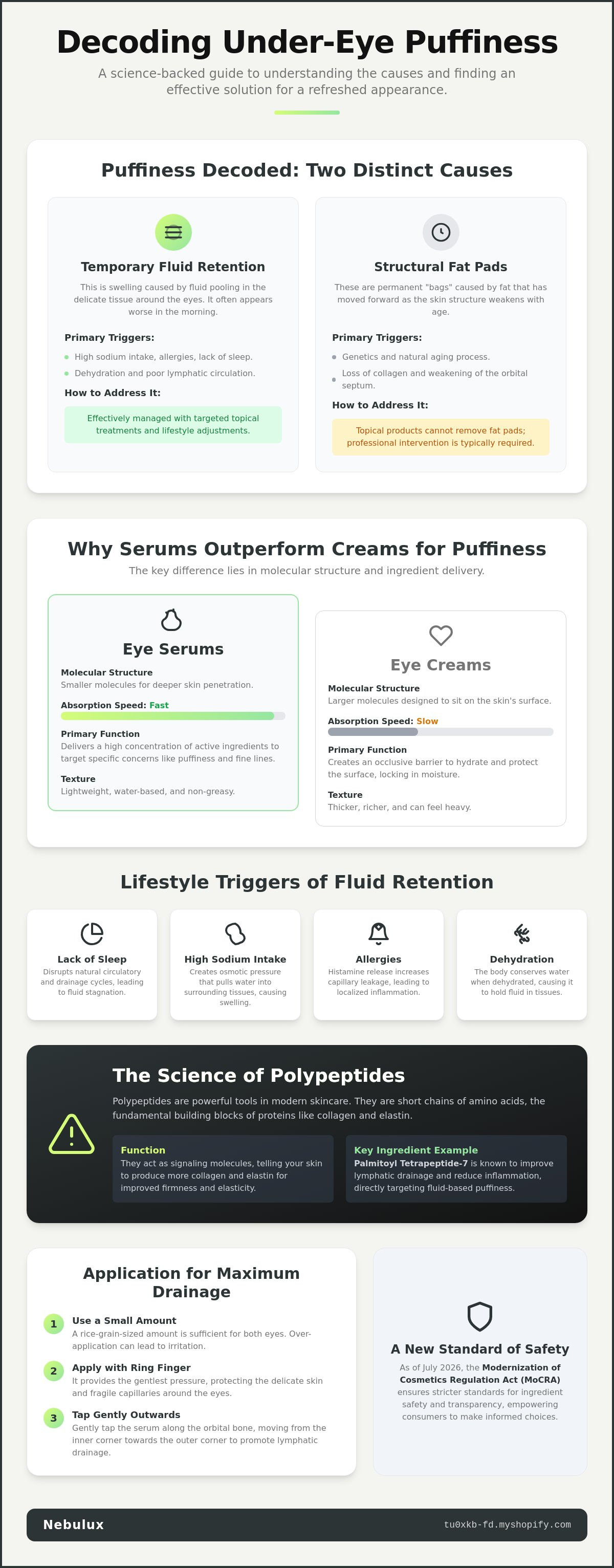
Under-eye puffiness is a functional concern rooted in both anatomy and daily habits. It primarily results from fluid accumulation in the periorbital tissue, the delicate area surrounding the eyes. This region has the thinnest skin on the human body; it's highly susceptible to visible changes from internal and external stressors. Understanding the Causes of Under-Eye Puffiness is the first step in selecting a corrective product that actually works. While many consumers seek an eye serum for puffiness to address aesthetic issues, the root cause dictates whether a topical treatment can provide a functional solution.
Several physiological factors contribute to this swelling. High sodium intake creates osmotic pressure that pulls water into the interstitial spaces of the tissue. Lack of sleep disrupts the body's natural circulatory and drainage cycles, leading to stagnation. Seasonal allergies also play a major role. Allergens trigger a histamine release that increases capillary permeability, causing localized inflammation and fluid leakage into the surrounding skin. Identifying these triggers helps in managing expectations for topical treatments.
Aging introduces permanent structural shifts that differ from daily swelling. Over time, the muscles supporting the eyelids weaken and the orbital septum loses its integrity. This allows fat that's normally confined to the area around the eye to migrate forward into the lower eyelids. It's vital to distinguish between temporary swelling and permanent under-eye bags. Temporary swelling responds well to an eye serum for puffiness. Permanent fat pads, however, usually require professional surgical intervention as they are a structural change rather than a fluid issue.
Fluid Retention vs. Structural Changes
Swelling often peaks immediately after waking. This occurs because horizontal positioning during sleep causes fluid to pool in the facial tissues. Once you are upright, gravity assists in natural lymphatic drainage. Structural changes are different; they involve the degradation of collagen and elastin within the epidermis. This loss of elasticity makes the skin less capable of containing fluid or fat. Targeted serums are most effective when they address these fluid-based issues and support early-stage skin laxity through repair-focused ingredients.
Common Lifestyle Triggers
Dehydration is a counterintuitive trigger for swelling. When the body lacks water, it enters a conservation mode and holds onto existing fluid in the tissues, leading to visible puffiness. Environmental stressors also accelerate tissue breakdown. UV exposure and pollution weaken the skin's barrier and damage the underlying support structure. Periorbital edema is the clinical term for eye puffiness. Addressing these lifestyle triggers alongside a consistent skincare regimen is the most efficient way to maintain a refreshed appearance.
Why Serums are Superior for Reducing Swelling
Traditional moisturizers focus on surface-level hydration. An eye serum for puffiness operates differently by utilizing a low-viscosity formula to transport active ingredients through the stratum corneum more efficiently. These formulations feature a smaller molecular structure than standard creams. This allows high concentrations of polypeptides and antioxidants to penetrate deeper layers of the skin where they can effectively target stagnant fluid and support the dermal matrix. Because serums are water-based or use lightweight lipid carriers, they deliver a potent dose of actives without the heavy, occlusive barrier found in traditional eye products.
Texture plays a critical role in managing morning swelling. Heavy creams can trap heat or feel excessively rich on puffy-prone skin, which sometimes exacerbates the appearance of fluid retention. Serums provide a cooling, weightless finish that integrates seamlessly into a morning routine. For those requiring a balance of depth and surface protection, hybrid serum-creams offer a functional solution. These hybrids combine the rapid absorption of a serum with the light emolliency of a cream to provide comprehensive care for the delicate periorbital area.
Serum vs. Cream: The Absorption Factor
The primary advantage of a serum is its speed of action. Serums absorb almost instantly, making them ideal for use under makeup or daily sunscreen. While creams often rely on heavy occlusives like petrolatum or thick waxes to lock in moisture, these ingredients can stay on the surface and feel greasy. As we age, the shift of fat pads and the weakening tissue structures around the eyes require ingredients that can reach the deeper epidermal layers. You can review a detailed breakdown of these differences in our guide on eye cream vs eye serum to determine which texture suits your specific skin type.
The Role of Delivery Systems
Effectiveness isn't just about the formula; it's about how the product is applied. Many high-performance serums utilize cooling applicators or metal rollers to provide immediate vasoconstriction. This physical cooling helps reduce redness and constricts blood vessels to minimize visible swelling. The mechanical action of a roller also assists in manual lymphatic drainage, moving fluid away from the eye area and toward the lymph nodes. If you're using a product with a built-in applicator, learning how to use an eye serum roller will maximize these drainage benefits. For a professional-grade approach at home, the AUQUEST Polypeptide Eye Serum Cream offers a streamlined hybrid format designed for rapid absorption and functional results.
The Science of Polypeptides in Eye Care
Polypeptides are short chains of amino acids. These molecules serve as the fundamental building blocks for essential skin proteins like collagen and elastin. When applied topically in an eye serum for puffiness, they function as bioactive signals. Peptides are the "messengers" that trigger cellular repair. This signaling process is critical for maintaining the structural integrity of the periorbital region. Unlike some harsh active ingredients, polypeptides are generally non-irritating. This makes them a reliable choice for the sensitive, thin skin under the eyes.
Targeted polypeptide serums provide a dual-action benefit. They address immediate swelling by supporting efficient fluid management while simultaneously working on long-term fine lines. By reinforcing the skin barrier, these formulas reduce the visibility of puffiness over time. A stronger barrier prevents trans-epidermal water loss and protects against external irritants. This creates a smoother, more resilient surface that resists the formation of temporary fluid pockets. Palmitoyl Tetrapeptide-7 is a specific peptide often used in modern formulations to target puffiness by improving lymphatic drainage and reducing inflammation. Multi-peptide formulations are a primary market trend in 2026, as they target various concerns like wrinkles and firmness simultaneously.
How Peptides Support Skin Elasticity
Increased collagen density is the primary goal of peptide application. Collagen and elastin provide the structural scaffolding for the under-eye area. As these protein levels rise, the skin becomes firmer and more elastic. Firmer skin is less prone to sagging. It effectively contains the underlying fat and fluid that cause a tired appearance. Using a high-performance eye serum for puffiness helps maintain this tension. This structural reinforcement is necessary because the eye area lacks the oil glands and thickness found elsewhere on the face. Consistent use provides several functional benefits:
- Collagen stimulation: Increases skin density and firmness to prevent sagging.
- Barrier repair: Protects the thin epidermis against environmental stressors.
- Fluid management: Supports natural drainage processes to minimize swelling.
Combining Peptides with Other Actives
Polypeptides work best when paired with complementary ingredients. Hyaluronic acid is a standard addition for its ability to provide essential moisture. It plumps the skin and smooths surface texture through hydration. Antioxidants offer another layer of protection. They defend the delicate eye area from environmental damage caused by UV rays and pollution. This combination ensures that the repair signals sent by the peptides aren't undermined by new tissue breakdown. The AUQUEST Polypeptide Eye Serum Cream utilizes this multi-ingredient approach to deliver a functional tool for home use. This serum-cream hybrid ensures that the skin receives both deep-level peptide signaling and surface-level hydration.
Application Techniques for Maximum Drainage
Application technique is as critical as ingredient selection for achieving a refreshed appearance. Even the most advanced eye serum for puffiness requires a methodical approach to facilitate fluid movement and ensure deep absorption. The goal is functional mechanical drainage. Applying product haphazardly can lead to skin irritation or missed opportunities for de-puffing. Consistency in your daily regimen ensures long-term cumulative benefits for skin firmness and structural support. Morning application is particularly vital. Because fluid pools in the periorbital tissue while you're horizontal, a targeted morning routine addresses this overnight buildup immediately.
The periorbital region contains fragile capillaries and the body's thinnest skin. Avoid pulling or tugging this area at all costs. Excessive pressure can damage these small vessels, leading to redness or further swelling. Using a light touch prevents micro-trauma and allows the serum to work without physical irritation. This professional approach prioritizes the integrity of the epidermis while maximizing the utility of the active polypeptides.
The Five-Step De-Puffing Method
Follow this structured sequence to optimize the performance of your eye serum for puffiness:
- 1. Cleanse: Wash the face thoroughly using a gentle cleanser. Removing surface oils and debris ensures optimal serum absorption into the deeper skin layers.
- 2. Dispense: Place a small, pea-sized amount of serum onto your ring finger or the product's built-in applicator. The ring finger naturally exerts the least amount of pressure.
- 3. Tap: Gently tap the product onto the skin. Start at the inner corner and move outward along the orbital bone. This "patting" motion stimulates blood flow without stretching the tissue.
- 4. Sweep: Use light, gliding motions toward the temples. This specific direction encourages stagnant fluid to move toward the lymphatic nodes for natural drainage.
- 5. Set: Allow the product to sit undisturbed for sixty seconds. This ensures the polypeptides and hydrating agents are fully absorbed before you apply additional layers like sunscreen or makeup.
Professional Tips for Better Results
For an enhanced cooling effect, store your eye serum in a dedicated skincare fridge. Cold temperatures induce immediate vasoconstriction, which constricts blood vessels and visibly reduces redness and swelling upon contact. Additionally, apply your serum to slightly damp skin. This technique helps lock in maximum hydration by trapping moisture on the surface. Ensure the product is fully absorbed before layering other cosmetics. This prevents "pilling" and maintains the efficacy of the active ingredients. For a streamlined, professional-grade solution at home, shop the AUQUEST Polypeptide Eye Serum Cream to improve your morning drainage routine.
Selecting the Right Eye Serum for Your Routine
Effective skincare is about precision. When choosing an eye serum for puffiness, you must prioritize formulas specifically engineered for the thin, delicate periorbital epidermis. Standard facial moisturizers often contain heavy oils, occlusives, or synthetic fragrances that can migrate into the eyes and cause further irritation. A functional selection focuses on high-performance actives with a low molecular weight. This ensures the product addresses the root causes of swelling rather than just sitting on the surface. Look for ingredients that offer a direct physiological benefit, such as peptides for structural support or antioxidants for environmental protection.
Multi-functional formulas are essential for a streamlined routine. A professional-grade eye serum for puffiness should also target dark circles and fine lines to provide a comprehensive result. In 2026, the full implementation of the Modernization of Cosmetics Regulation Act (MoCRA) has led to significantly increased transparency in ingredient labeling. This regulatory shift makes it easier to identify products with clean, utilitarian components and no unnecessary fillers. A streamlined ingredient deck reduces the risk of allergic reactions, which are a primary cause of periorbital edema. Prioritize products that emphasize repair-focused biochemistry over decorative packaging or abstract brand narratives.
Why AUQUEST Polypeptide Eye Serum Cream?
The AUQUEST Polypeptide Eye Serum Cream is a targeted, efficient tool for home use. It bridges the gap between different product formats by combining the high-active potency of a serum with the emollient comfort of a cream. This serum-cream hybrid is specifically engineered to target under-eye bags and loss of firmness through its repair-focused peptide formula. It's a utilitarian choice for those seeking professional-grade results without a complex multi-step regimen. The lightweight texture ensures rapid absorption, allowing the polypeptides to begin signaling cellular repair immediately. This hybrid approach provides both the deep treatment needed for fluid management and the surface hydration required for a smooth texture.
Integrating Serum into Your Daily Routine
Consistency is the foundation of visible results. For managing chronic puffiness, use the serum twice daily; once in the morning and once before sleep. Morning application addresses fluid accumulation from horizontal positioning during rest. Evening application supports the skin's natural overnight repair cycle and protein synthesis. Pair your serum with a broad-spectrum SPF during the day. This protects the repaired skin barrier and prevents UV-induced collagen breakdown. Nebulux provides streamlined access to these beauty essentials online, offering a reliable digital storefront for functional skincare needs. Maintaining this simple, twice-daily habit ensures the cumulative benefits of the polypeptides are fully realized.
Achieving Sustained Under-Eye Resilience
Efficiently managing periorbital swelling requires a dual focus on mechanical drainage and biochemical repair. You now understand that while lifestyle factors like sodium and sleep play a role, the structural integrity of the skin determines how well the area resists fluid accumulation. Polypeptides serve as the essential messengers for collagen synthesis; they provide the scaffolding necessary to keep the under-eye area firm and resilient. By choosing a high-performance eye serum for puffiness, you ensure that active ingredients reach the deeper epidermal layers where they're most effective.
A streamlined routine doesn't require dozens of products; it requires the right ones. Consistency with professional-grade formulas leads to cumulative benefits that surface-level moisturizers simply can't match. You're now equipped with the application techniques and ingredient knowledge to maintain a refreshed, alert appearance every morning without unnecessary steps.
Ready to upgrade your daily regimen? Shop the AUQUEST Polypeptide Eye Serum Cream at Nebulux today. This efficient serum-cream hybrid texture features a targeted polypeptide formula designed for daily under-eye repair and rapid absorption. Take control of your skincare with functional tools that deliver measurable results.
Frequently Asked Questions
How long does it take for an eye serum to reduce puffiness?
Immediate results from cooling agents take 15 to 30 minutes to visibly reduce swelling. Cumulative structural benefits from an eye serum for puffiness require consistent twice-daily application for four to eight weeks. This timeframe allows the polypeptides to signal collagen production and reinforce the dermal matrix. Functional improvements in skin elasticity are gradual and depend on regular use.
Can I use a face serum under my eyes for puffiness instead?
You shouldn't use face serums on the periorbital area. Facial formulations often contain higher concentrations of actives or fragrances that irritate the 0.5mm thick skin around the eyes. Dedicated eye products are pH-balanced and ophthalmologist-tested for safety in this sensitive zone. Using the wrong product can lead to chemical sensitivity or increased inflammation.
Does caffeine in eye serums actually help with swelling?
Caffeine acts as a functional vasoconstrictor to reduce swelling. It constricts blood vessels and stimulates localized microcirculation to move stagnant fluid away from the eyes. While effective for temporary de-puffing, it works best when paired with polypeptides for long-term tissue repair. This combination addresses both the symptoms and the underlying structural causes of puffiness.
Is eye puffiness a sign of aging or just tiredness?
Puffiness is caused by both factors. Tiredness leads to temporary periorbital edema from fluid pooling, while aging causes structural changes like fat migration and muscle weakening. A targeted eye serum for puffiness is most effective for fluid-based swelling and early skin laxity. It's important to distinguish between these causes to manage your expectations for topical treatments.
Should I apply eye serum before or after moisturizer?
Apply eye serum before your moisturizer. Standard skincare protocol dictates applying products from thinnest to thickest consistency. This ensures the serum's small molecular structure penetrates the epidermis before a heavier moisturizer creates an occlusive barrier on the surface. Reversing this order prevents the active ingredients from reaching the deeper skin layers.
Can peptides in eye serums cause irritation for sensitive skin?
Peptides are generally non-irritating and suitable for sensitive skin. Unlike retinoids or alpha-hydroxy acids, polypeptides are amino acid chains that mimic the body's natural signaling molecules. They provide repair benefits without the redness or peeling often associated with other high-performance actives. This makes them a utilitarian choice for the delicate and reactive skin around the eyes.
What is the best way to store my eye serum for maximum effectiveness?
Store your serum in a cool, dark place or a dedicated skincare fridge. Low temperatures provide a thermal benefit by inducing immediate vasoconstriction upon application. This physical cooling works alongside the chemical actives to accelerate the reduction of morning swelling. Avoid storing products in direct sunlight, as heat can degrade the stability of sensitive polypeptide chains.