
Green Tea Mask for Acne: Benefits, Ingredients, and Reference Guide 2026
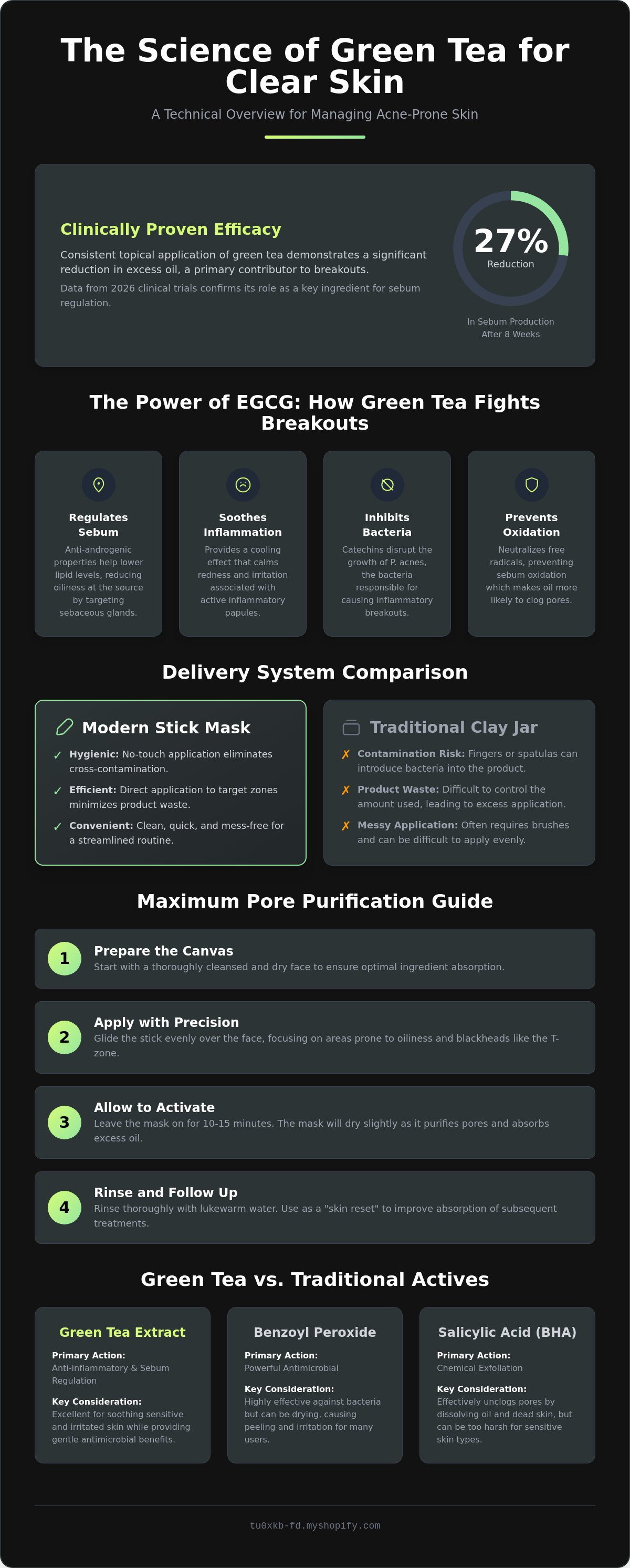
Did you know that topical green tea can reduce sebum production by approximately 27% after eight weeks of consistent use? For individuals managing persistent breakouts, a green tea mask for acne serves as a functional, scientifically backed tool to regulate oil and soothe visible inflammation. You're likely familiar with the frustration of stubborn blackheads and the messy, time-consuming application of traditional mud masks. It's common to feel that standard treatments often prioritize harsh acids over skin barrier health.
This reference guide provides a technical overview of how green tea skincare products target acne, clear pores, and balance oily skin. You'll learn exactly how bioactive compounds like epigallocatechin gallate (EGCG) function to reduce inflammatory papules. We will also preview the latest 2026 cosmetic regulations and the efficiency of modern delivery systems like the Cleansing Green Stick. This analysis ensures you have the data needed for a clearer, more organized skincare routine.
Key Takeaways
- Identify how epigallocatechin gallate (EGCG) targets acne-prone skin by lowering lipid levels and neutralizing surface inflammation.
- Compare the hygiene and efficiency of solid stick applicators against traditional clay jars to eliminate cross-contamination and product waste.
- Learn the precise application method for a green tea mask for acne to ensure maximum pore purification and blackhead removal.
- Discover the layering strategy for using clay masks as a skin "reset" to improve the absorption of targeted treatments like the AUQUEST Polypeptide Eye Serum Cream.
- Review 2026 clinical data showing that consistent topical green tea application can reduce sebum production by approximately 27%.
Understanding Green Tea Skincare Products for Acne-Prone Skin
Green tea skincare products utilize concentrated extracts from Camellia sinensis, the tea plant. These formulations serve as a functional baseline for managing blemish-prone skin. A green tea mask for acne is a topical antioxidant treatment for sebum control. Its primary function centers on neutralizing free radicals and reducing surface inflammation. This botanical approach targets the biological root causes of breakouts. It manages both bacterial growth and excessive oil production without the harshness of synthetic alternatives.
Effective acne management requires a multi-pronged strategy. Traditional topicals often strip the skin of necessary moisture. Green tea extracts provide a utilitarian alternative. They offer a cooling sensation upon application. This immediately addresses the redness associated with active papules. By creating an environment hostile to bacteria, these masks prevent future lesions from forming. It's a direct, effective method for maintaining skin clarity.
The Role of Antioxidants in Acne Management
Oxidative stress contributes to the progression of acne lesions. When surface lipids are exposed to environmental stressors, they undergo oxidation. This chemical change makes sebum more comedogenic. It clogs pores more effectively than non-oxidized oil. Antioxidants in green tea prevent this sebum oxidation process. This inhibits the initial stage of pore blockage. It's a non-irritating alternative to harsh chemical exfoliants. It stabilizes the skin environment for long-term maintenance.
Green Tea vs. Traditional Acne Treatments
Comparing green tea to established pharmaceutical ingredients reveals distinct functional advantages. Benzoyl Peroxide is a powerful antimicrobial, but it's often drying. Green tea is significantly more soothing. It provides antimicrobial benefits without the risk of peeling. Salicylic Acid focuses on chemical exfoliation. Green tea focuses on inflammation reduction. This makes it a superior choice for sensitive and combination skin types. It addresses the "fire" of a breakout rather than just the "clog."
Modern delivery systems, such as the Cleansing Green Stick, prioritize efficiency. These formats allow for direct application to target areas. This avoids the mess of traditional jars and reduces product waste. Research from 2024 indicates that topical green tea can reduce sebum production by approximately 27% over eight weeks. This data supports its use as a primary tool for oily skin management. It fits naturally into a professional skincare routine focused on clarity, texture, and efficiency.
Key Bioactive Compounds: How EGCG and Catechins Fight Breakouts
Green tea efficacy relies on a specific group of polyphenols known as catechins. Among these, Epigallocatechin gallate (EGCG) is the most potent and bioactively significant. Scientific literature, including a comprehensive review of tea polyphenols for acne, highlights EGCG's ability to modulate cellular pathways. Unlike topical treatments that only address surface bacteria, EGCG exhibits anti-androgenic properties. It helps lower lipid levels on the skin by interfering with the hormonal signals that trigger excessive oil production. This biological intervention is a primary reason why a green tea mask for acne is effective for long term skin management.
Antimicrobial effects further support the clearance of active lesions. Catechins inhibit the growth of Propionibacterium acnes (P. acnes), the bacteria responsible for inflammatory breakouts. By disrupting the bacterial environment, these compounds reduce the frequency of new papules and pustules. Formulations also utilize Vitamin B-2 and Vitamin E to support skin health. Vitamin B-2 maintains collagen levels and skin structural integrity. Vitamin E provides essential antioxidant support for skin barrier repair during active breakouts. This combination ensures the skin remains resilient while active ingredients work to clear pores.
Sebum Regulation Mechanisms
Polyphenols directly reduce the activity of sebaceous glands. This is a critical distinction from products that merely absorb oil after it reaches the surface. By targeting the glands themselves, catechins improve skin texture and reduce pore visibility. Clinical data from 2024 shows that topical EGCG concentrations between 1% and 5% can reduce sebum production by roughly 12% within twelve weeks. Consistent application leads to a more balanced, matte complexion. Utilizing an efficient delivery system like the Cleansing Green Stick ensures these catechins are applied evenly and directly to high-lipid areas without product waste.
Reducing Redness and Inflammation
Green tea provides an immediate soothing effect on cystic acne and whiteheads. It works by down-regulating pro-inflammatory cytokines in the skin. These cytokines are the chemical messengers responsible for the swelling, heat, and redness associated with breakouts. By calming these signals, the mask reduces the physical discomfort of acne. It also serves as a functional post-exposure treatment. If the skin is irritated by environmental factors or harsh chemical peels, the cooling properties of green tea help restore a neutral state. This calming action prevents the rebound inflammation that often leads to post-inflammatory hyperpigmentation.
Stick vs. Traditional Clay Masks: Choosing the Right Format
Selecting a delivery system is as critical as the ingredient profile. Traditional mud masks typically require jars, spatulas, or brushes. This process is often messy and time-consuming. A green tea mask for acne in a stick format offers a streamlined alternative. It prioritizes speed, cleanliness, and targeted application. This format is a functional evolution for users who value efficiency in their daily skincare routine.
Hygiene factors are paramount for individuals managing active breakouts. Open-mouth jars are prone to cross-contamination. Repeated finger-to-jar contact introduces bacteria and environmental pollutants into the product. This can compromise the formula's integrity over time. Solid stick applicators maintain a sanitary barrier. The product only contacts the skin during the glide. This closed-loop system reduces the risk of spreading acne-causing bacteria across the face.
Application precision allows for effective multi-masking. Most acne-prone individuals have combination skin. They require deep pore purification on the T-zone but need to avoid drying out the cheeks. Liquid or mud masks often drip or spread uncontrollably. Stick applicators allow for surgical accuracy. You can coat the nose, chin, and forehead without affecting sensitive or dry areas. This ensures that the green tea mask for acne works only where it's needed.
Travel-friendly design is a core utilitarian benefit. Solid sticks are leak-proof. They won't spill in a gym bag, backpack, or suitcase. Because they are not liquids, they are fully TSA-compliant. This allows for consistent skin maintenance during transit. You don't have to sacrifice your clear-skin routine while away from home.
The Technology of the Cleansing Green Stick
The Cleansing Green Stick utilizes a solid-state clay formulation. This structure ensures a controlled, even product release during every use. It won't melt, crumble, or lose its shape in humid environments. The core contains high-performance pore-purifying clay combined with stabilized green tea extracts. It glides smoothly across the skin surface. Removal is equally efficient. The formula is designed to rinse clean with lukewarm water. This eliminates the need for heavy scrubbing, which can irritate sensitive acne lesions.
Efficiency and Product Longevity
Solid formats provide superior product longevity. There is significantly less waste compared to liquid or mud masks. You don't leave excess residue on your hands or application tools. Each glide provides a consistent dosage across the entire face. Storage benefits are also notable. Solid forms experience slower oxidation of active ingredients. The surface area exposed to oxygen is minimal. This keeps the catechins potent and effective until the product is completely finished.
Application Guide for Maximum Pore Purification
Proper execution of the masking process maximizes the efficacy of active catechins. Preparation is the first step. Start with a clean, towel-dried face. Removing surface debris and initial oils allows the formula to penetrate the pore lining effectively. A damp surface can dilute the active ingredients, reducing their impact on sebum regulation. This preparation phase is essential for any high-performance green tea mask for acne.
Application is straightforward. Glide the solid stick evenly across the skin. The format allows for a controlled, opaque layer without the need for brushes or fingers. Target the forehead, nose, and chin specifically. These areas typically have the highest density of sebaceous glands. Allow the mask to sit for 10 to 15 minutes. This duration is sufficient for the clay to adsorb impurities and for EGCG to interact with the skin surface. Removal requires lukewarm water and gentle circular motions. This technique ensures the product is completely cleared while providing a mild mechanical exfoliation to active lesions.
To begin a structured pore-purification routine, you can order the Cleansing Green Stick for direct and hygienic application.
Usage Frequency by Skin Type
- Oily skin: 2-3 times per week. This frequency is necessary for consistent sebum maintenance and blackhead prevention.
- Dry or Sensitive skin: 1 time per week. Focus application on the nose and chin. This prevents potential irritation on thinner, more reactive areas like the cheeks.
- Combination skin: Targeted T-zone application. Use the stick format to treat the oily center of the face while leaving dry patches untouched.
Common Mistakes to Avoid
A frequent error is allowing the clay to crack. Rinse the mask while it still feels slightly tacky. If the clay reaches a bone-dry state, it begins to draw essential moisture from the skin barrier. This leads to rebound oil production and dehydration. Another mistake is over-application. A thin, consistent layer provides full coverage and maximum benefit. Stacking product only increases drying time and waste. Finally, always follow with a hydration step. Using a green tea mask for acne clears the pores, making it the ideal time to apply targeted treatments to the skin. This ensures the barrier remains intact while the active ingredients work to clear the complexion.
Integrating Green Tea Masks into a Complete Routine
Skincare efficacy depends on sequence. A green tea mask for acne acts as a functional "reset" for the skin barrier. It prepares the surface for active treatments by removing accumulated debris. This layering strategy ensures that subsequent serums and creams reach the intended skin layers without obstruction. Post-mask protection is the final essential step. You must apply a moisturizer to lock in the green tea benefits and prevent transepidermal water loss. It's a direct, logical process that maximizes product utility.
A clean, oil-free base is also the prerequisite for professional makeup application. Excess sebum can cause liners and foundations to slip or oxidize. By using a purifying mask before your cosmetic routine, you ensure long-lasting wear. For instance, applying a seal eyeliner pen onto a freshly balanced complexion results in sharper, more symmetric wings that resist smudging throughout the day. This creates a stable surface for high-pigment products.
The Pre-Serum Cleanse
Clay masks are the ideal precursors to peptide treatments. Sebum acts as a physical shield. It prevents large-molecule nutrients from penetrating the epidermis. By clearing this barrier, you improve the absorption of high-performance products. This synergy is particularly beneficial for the orbital area. A clear face allows for better polypeptide eye serum uptake. This dual approach addresses both active acne on the T-zone and structural repair around the eyes. It's a comprehensive method for total face health that avoids unnecessary fluff.
Maintenance and Long-Term Results
Consistent application yields measurable improvements. Users typically observe significant changes after four weeks of regular use. This timeline allows for a full skin cell turnover cycle. You should expect a reduction in blackhead density and more balanced oil levels. Clinical data shows that persistent catechin application stabilizes sebaceous gland activity over time. Adjust your routine based on seasonal skin changes. High humidity often requires more frequent masking to manage increased sebum. Conversely, winter months may necessitate a shift toward targeted T-zone use only to preserve moisture on the cheeks.
A streamlined, functional skincare kit should include these components:
- Purifying Green Tea Stick for pore maintenance.
- Hydrating moisturizer to maintain the lipid barrier.
- Targeted peptide serum for structural repair.
- Broad-spectrum SPF for daytime protection.
This organized approach minimizes the time spent on skincare while maximizing the utility of every product. By integrating a green tea mask for acne into this structured framework, you create a reliable system for long-term clarity and skin health. It's an efficient, results-oriented strategy for the modern consumer.
Achieving Long-Term Skin Clarity with Precision Tools
Consistent use of a green tea mask for acne provides a scientifically backed method for regulating lipid levels and neutralizing inflammation. The transition from traditional jars to solid stick applicators eliminates cross-contamination while ensuring targeted delivery of potent catechins like EGCG. This functional approach allows for a streamlined routine that prioritizes hygiene and efficiency. By clearing the skin's surface, you create the ideal environment for advanced treatments like polypeptide eye serums and precision eyeliners. It's a logistical upgrade to your daily maintenance that yields tangible results within a standard four-week cell turnover cycle.
Shop the Cleansing Green Stick at Nebulux to access a curated selection of functional skincare designed for professional results. Nebulux provides direct shipping on all beauty essentials with a specific focus on precision tools and high-performance treatments. Maintaining a clear, balanced complexion is simpler when you utilize delivery systems engineered for accuracy and longevity. You can now build an organized skincare protocol that respects your time and skin health. Start your optimized routine today to experience the benefits of modern botanical engineering.
Frequently Asked Questions
Is a green tea mask good for acne scars?
Green tea helps reduce post-inflammatory erythema, or the persistent redness left behind by breakouts, by down-regulating pro-inflammatory cytokines. It's less effective for deep, structural atrophic scarring that requires clinical intervention. Consistent use of a green tea mask for acne improves overall skin texture and tone. This creates a smoother surface and helps fade the appearance of minor surface discolorations over time.
How often should I use a green tea mask stick for blackheads?
Use the mask stick 2-3 times per week for optimal blackhead management on oily skin. This frequency allows the clay to adsorb excess sebum before it oxidizes and hardens within the pores. For combination skin, limit application to the T-zone to prevent over-drying the cheeks. Stick to a consistent schedule to maintain clear pores and prevent new comedones from forming.
Can I leave a green tea mask on overnight?
No, you shouldn't leave a clay-based mask on overnight. Clay is designed to adsorb oil and impurities within a 10 to 15 minute window. Leaving it on longer can severely dehydrate the skin and disrupt the moisture barrier. This often triggers a rebound effect where the skin produces more oil to compensate for the dryness. Rinse with lukewarm water while the mask still feels slightly tacky.
Does the green tea stick mask work for sensitive skin?
Yes, green tea is a non-irritating botanical that naturally soothes reactive skin types. The stick format is particularly beneficial for sensitive skin because it allows for precise, targeted application. You can avoid reactive patches on the cheeks while treating oily areas on the nose or chin. Always perform a patch test on the inner arm before your first full-face application to ensure compatibility.
What should I apply after using a green tea clay mask?
Apply a hydrating moisturizer or a targeted serum immediately after rinsing the mask. Since the clay clears the sebum shield, your skin is now more receptive to active ingredients. This is the ideal time to apply the AUQUEST Polypeptide Eye Serum Cream for maximum absorption. Locking in moisture prevents dehydration and ensures the skin barrier remains resilient after the deep-cleansing process.
Do green tea masks help with hormonal acne?
Green tea masks help manage the external symptoms of hormonal acne by reducing surface oil and visible inflammation. The EGCG in the formula has anti-androgenic properties that help lower lipid levels in the sebaceous glands. While a green tea mask for acne doesn't regulate internal hormones, it provides a functional tool for controlling the resulting breakouts, heat, and redness associated with hormonal cycles.
Why is my skin red after using a clay mask?
Temporary redness is often caused by increased blood flow to the skin surface as the clay dries and tightens. This is a normal physiological response and should subside within 30 minutes. However, if the redness is accompanied by itching or burning, you may have left the mask on too long. Ensure you rinse the product off before it becomes bone-dry to prevent unnecessary irritation.
Can I use a green tea mask and a polypeptide serum together?
Yes, these products work synergistically in a professional skincare routine. Use the green tea mask first to purify the pores and remove dead skin cells. This "reset" allows the polypeptide serum to penetrate deeper into the epidermis for more effective repair. This combination addresses both active blemish concerns and long-term skin structural integrity in one efficient session.