
Skincare for Fine Lines: A Reference Guide to Effective Ingredients and Routines
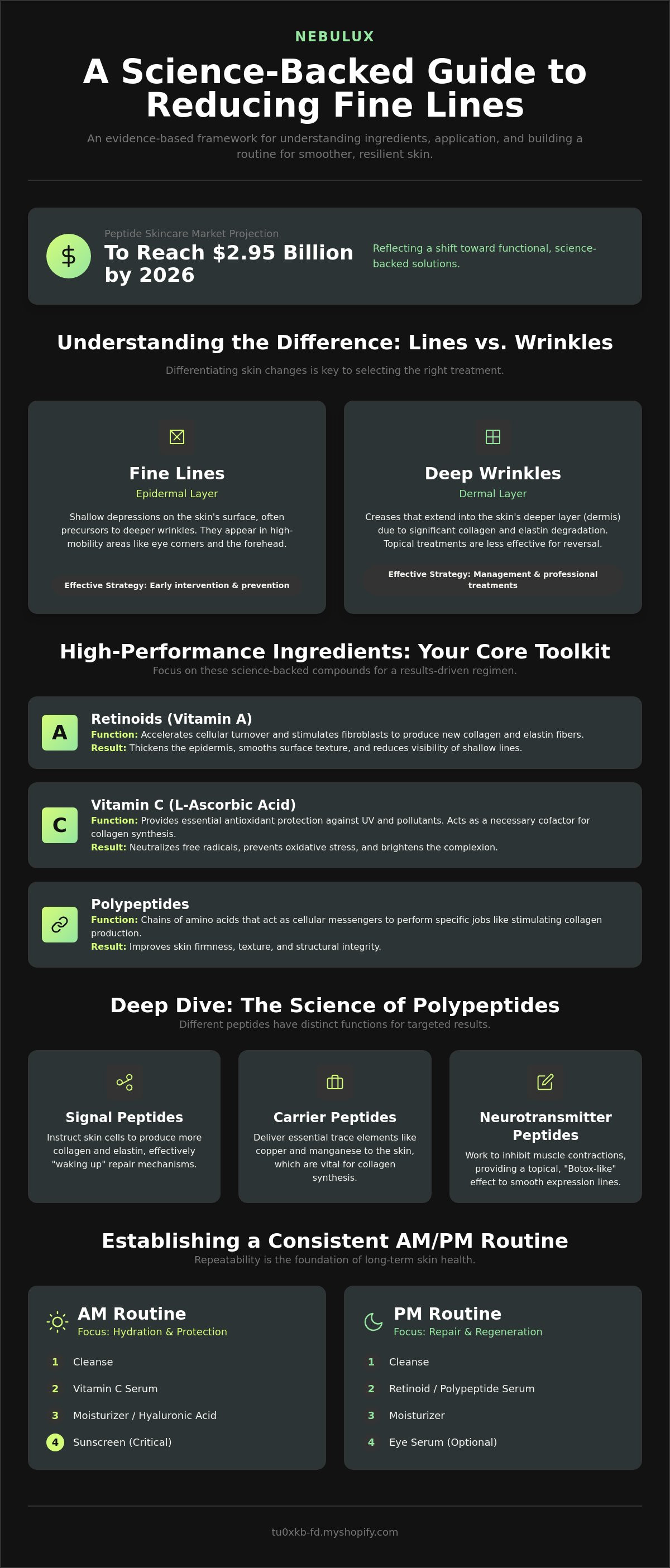
By 2026, the global peptide skincare market is projected to reach $2.95 billion. This growth reflects a shift toward functional, science-backed solutions. Selecting effective skincare for fine lines often feels like decoding a technical manual. Most users find it difficult to distinguish between marketing fluff and functional ingredients. It's frustrating to invest in a regimen without a clear understanding of application order or skin biology. Ineffective products often lead to wasted resources and unaddressed skin concerns.
This reference guide clarifies the functional science behind fine line reduction and skin longevity. You'll learn how specific ingredients like polypeptides and retinoids interact with the skin barrier to improve physical texture. We provide a direct, results-driven, science-based framework for building a daily routine. This includes a breakdown of technical terminology, ingredient concentrations, and a logical sequence for product application. Use this information to maintain a repeatable regimen for smoother, resilient skin.
Key Takeaways
- Differentiate between shallow epidermal lines and deep dermal wrinkles to select appropriate treatment concentrations and active ingredients.
- Utilize retinoids and Vitamin C for accelerated cellular turnover and critical antioxidant protection against environmental stressors.
- Learn how signal, carrier, and neurotransmitter peptides function within effective skincare for fine lines to stimulate collagen production.
- Maximize ingredient absorption through methodical skin preparation and the use of manual tools like collagen rollers for lymphatic drainage.
- Follow a repeatable AM/PM routine focused on daytime hydration and protection paired with nighttime cellular repair.
Fine Lines vs. Deep Wrinkles: Understanding the Basics
Fine lines are shallow depressions occurring primarily in the epidermal layer. They differ from deep wrinkles, which extend into the dermal layer. Understanding Wrinkles involves recognizing that fine lines are often the precursor to permanent skin folds. Early intervention is significantly more effective than attempting to reverse established dermal creases. Effective skincare for fine lines focuses on maintaining structural integrity before damage becomes irreversible. These initial surface-level changes indicate that the skin's natural repair mechanisms are beginning to slow down.
The aging process involves the progressive depletion of collagen and elastin. Collagen provides the skin's structural framework, while elastin allows for recoil. When these proteins degrade, the skin loses its ability to bounce back after movement. UV exposure, repetitive facial expressions, and chronic dehydration accelerate this breakdown. Addressing these factors early prevents shallow lines from transitioning into deep, static furrows. Proactive topical treatments support the skin's foundation, reinforcing the extracellular matrix against daily mechanical stress.
The transition from a fine line to a deep wrinkle occurs when the epidermal depression breaches the dermal-epidermal junction. Once damage reaches the dermis, topical treatments become less effective at complete reversal. This structural shift highlights the utility of a "prejuvenation" strategy. Focusing on the epidermis while it is still capable of rapid turnover ensures the skin remains smooth and resilient for longer periods. It is a functional approach to long-term skin health.
Identifying Early Signs of Aging
Fine lines typically appear first in areas with high mobility and thin skin. Common locations include the outer eye corners, forehead, and the area surrounding the mouth. Dynamic lines only appear during facial expressions, such as smiling or squinting. Static lines remain visible even when the face is at rest. Skin thickness varies across the face; thinner skin around the eyes often shows the first signs of structural fatigue. Identifying these early markers allows for a targeted approach to skincare for fine lines. Monitoring these changes helps determine the necessary concentration of active ingredients for your specific needs.
Environmental and Lifestyle Factors
Cumulative sun exposure remains the primary cause of photoaging. UV radiation triggers the production of free radicals, which break down collagen fibers. Environmental pollutants also contribute to oxidative stress, further compromising the skin barrier. Proper hydration levels play a critical role in immediate skin appearance. Dehydrated skin lacks volume, making shallow depressions more prominent. Maintaining optimal moisture levels provides an immediate plumping effect, temporarily smoothing the epidermal surface while long-term actives work on deeper repair. Consistent protection and moisture retention are foundational for any functional regimen.
In addition to topical care, a holistic approach to health can provide internal support for your skin's natural defenses. Utilizing wellness supplements from CelluVive can help bolster your overall health, ensuring your body is well-equipped to manage the effects of environmental stressors from the inside out.
Essential Ingredients for Fine Line Management
Effective skincare for fine lines relies on high-performance compounds with documented physiological effects. Selecting ingredients based on functional utility ensures a results-driven regimen. Retinoids, Vitamin C, and humectants form the core of a professional-grade strategy. These Dermatologist-Recommended Ingredients target specific structural deficits in the epidermal and dermal layers. Clarity in ingredient selection prevents the use of ineffective, filler-heavy products.
Retinoids and retinol remain the gold standard for accelerating cellular turnover. These Vitamin A derivatives stimulate fibroblasts to produce new collagen and elastin fibers. This process thickens the epidermis and smooths surface texture. Regular application reduces the visibility of shallow depressions. For targeted treatment around the delicate orbital area, a polypeptide eye serum provides a concentrated delivery of active compounds without excessive irritation.
Vitamin C, specifically L-ascorbic acid, provides essential antioxidant protection. It neutralizes free radicals generated by UV radiation and environmental pollutants. This prevents the oxidative stress that leads to premature structural breakdown. Beyond protection, Vitamin C acts as a necessary cofactor for collagen synthesis. It brightens the complexion by inhibiting tyrosinase activity, which addresses the uneven tone often accompanying fine lines.
Hyaluronic acid and niacinamide address texture through hydration and barrier reinforcement. Hyaluronic acid is a powerful humectant. It attracts up to 1,000 times its weight in water, providing an immediate surface plumping effect. Niacinamide, or Vitamin B3, supports the skin barrier by increasing ceramide production. This improves overall skin resilience and refines pore texture. These ingredients work synergistically to maintain a smooth, hydrated epidermal surface.
The Role of Antioxidants
Antioxidants neutralize unstable molecules that damage cellular DNA and structural proteins. By stabilizing collagen fibers within the dermis, they prevent the deepening of existing lines. Daytime application is critical for mitigating photoaging effects. Combining Vitamin C with Vitamin E and ferulic acid increases stability and efficacy. This defensive layer is the first line of combat against cumulative environmental damage.
Humectants and Barrier Support
Glycerin and ceramides are vital for long-term moisture retention. They prevent transepidermal water loss (TEWL) by sealing the skin's surface. A compromised barrier leads to chronic dehydration, which makes fine lines significantly more visible. Healthy barrier function ensures the skin remains supple and capable of self-repair. Consistent use of barrier-supporting lipids creates a resilient foundation for more aggressive active treatments. This functional approach prioritizes skin health over temporary cosmetic fixes.
The Science of Polypeptides in Skincare
Polypeptides are short chains of amino acids that serve as the fundamental building blocks for proteins like collagen and elastin. In a functional approach to skincare for fine lines, these molecules act as chemical messengers. When applied topically, they signal the skin to initiate specific repair processes. This biological signaling increases the production of structural proteins necessary for maintaining skin density. Consistent application leads to a firmer, more resilient epidermal surface. It's a targeted method for addressing the underlying causes of skin sagging and texture irregularities.
Functional classification is essential for selecting effective products. Three primary categories of peptides exist in modern formulations:
- Signal Peptides: These trigger fibroblasts to synthesize new collagen and elastin fibers.
- Carrier Peptides: These deliver trace elements like copper to the skin to facilitate enzymatic processes and wound healing.
- Neurotransmitter Inhibitor Peptides: These slightly relax facial muscles to reduce the depth of expression lines, similar to topical neuromodulators.
Why the Eye Area Requires Specialized Peptides
The periorbital skin is significantly thinner than the rest of the face. It lacks the dense network of sebaceous glands found elsewhere, making it prone to chronic dehydration. This area shows structural decline faster than the cheeks or forehead. Specialized formulas like the Nebulux Polypeptide Eye Serum Cream address these specific vulnerabilities. They deliver high concentrations of actives without the heavy occlusives that can cause milia. Integrating a polypeptide eye serum into a preventative routine targets puffiness, dark circles, and crows feet directly. It's an efficient way to manage the delicate eye contour.
Polypeptides vs. Retinol
Retinol is frequently associated with irritation, redness, and peeling. Polypeptides offer a non-irritating alternative for sensitive skin types. They don't increase photosensitivity, which makes them suitable for both morning and evening application. Using both ingredients in a single routine creates a synergistic effect. Retinol accelerates cellular turnover while peptides provide the necessary signals for new protein synthesis. Peptide-based formulas are generally more stable than pure retinol, though they still require airtight packaging to prevent oxidation. This combination is a robust strategy for skincare for fine lines.
Effective Application Methods for Topical Treatments
Correct application is as critical as ingredient selection. Even the most advanced skincare for fine lines fails if it cannot penetrate the epidermal barrier. Traditional rubbing often causes unnecessary friction and can stretch delicate tissue. Instead, utilize the "tap and press" method. This technique involves using fingertips to gently press product into the skin. This facilitates absorption through the follicular openings. It ensures a more even distribution of active compounds without mechanical stress. Professional application focuses on efficiency and tissue preservation.
Consistency takes precedence over ingredient concentration. A low-concentration peptide used daily outperforms a high-concentration treatment used sporadically. Frequent, smaller doses maintain a steady state of active ingredients in the skin. Establish a repeatable application rhythm. This allows the skin to maintain steady levels of active metabolites. For the best results, integrate physical tools to enhance the physiological response. You can buy the AUQUEST Polypeptide Eye Serum Cream to begin a systematic approach to under-eye repair.
Using Rollers and Precision Tools
Manual tools provide functional benefits that manual application lacks. A collagen roller offers a cooling effect that constricts blood vessels. This reduces localized inflammation and puffiness. This process aids in lymphatic drainage. It moves stagnant fluid away from the face, which minimizes the appearance of fluid retention around fine lines. Tool hygiene is mandatory. Sanitize rollers with 70% isopropyl alcohol after every use. This prevents bacterial transfer and potential breakouts. Precision tools allow for targeted delivery in the periorbital and nasolabial folds. These areas require specific pressure that fingers often cannot provide.
Skin Preparation and Cleansing
Absorption requires a clear canvas. Surface debris, excess sebum, and environmental pollutants block active ingredients. They prevent skincare for fine lines from reaching the viable epidermis. Using a Cleansing Green Stick provides a direct, mess-free way to purify the skin. It removes impurities without stripping the natural lipid barrier. Regular exfoliation is also necessary. It removes dead corneocytes. These cells act as a physical barrier to peptides and antioxidants. Ensure the skin returns to a neutral pH balance after cleansing. Peptide stability depends on a specific pH range. A prepared surface maximizes the utility of every product in your regimen.
Establishing a Consistent Fine Line Skincare Routine
A successful regimen for skincare for fine lines requires a logical order of operations. Layering products from thinnest to thickest consistency ensures maximum penetration. Water-based serums must precede oil-based creams or occlusives. This sequence prevents heavier formulas from blocking the absorption of lighter, high-performance actives. Consistency remains the most significant factor in achieving visible results. A simplified, repeatable process is superior to a complex, inconsistent one.
Morning routines focus on protection and hydration. Antioxidants neutralize environmental stressors encountered throughout the day. SPF is the final, non-negotiable step to prevent further photoaging. Evening routines prioritize repair and active treatment. This is the optimal time for retinoids and peptides to support cellular turnover and protein synthesis. Skin permeability increases at night. This makes the evening the most effective window for corrective skincare for fine lines. Results require patience and strict adherence to the sequence.
Visible improvement follows a specific biological timeline. The average skin cell turnover cycle lasts approximately 28 to 40 days. Results from peptide and retinoid treatments typically manifest after 8 to 12 weeks of consistent use. Surface hydration provides immediate plumping, but structural changes take months. Managing expectations prevents the premature abandonment of effective routines. Track progress through monthly high-resolution photography to identify subtle texture refinements.
Sample AM/PM Regimen
- Cleanse: Purify the surface using a Cleansing Green Stick.
- Tone: Apply a pH-balancing toner to prepare the epidermal layer.
- Serum: Apply lightweight polypeptide or Vitamin C serums.
- Eye Treatment: Use AUQUEST Polypeptide Eye Serum Cream for targeted repair.
- Moisturize: Seal in hydration with a lipid-rich cream or lotion.
- Protect (AM only): Apply broad-spectrum SPF 30 or higher.
Proper storage maintains product potency. Keep serums in a cool, dark environment. Heat and light degrade active compounds like Vitamin C and retinol. Ensure lids are sealed tightly to prevent oxidation.
Monitoring Progress and Adjusting
Monitor the skin for signs of over-exfoliation. Redness, stinging, or a "waxy" texture indicate a compromised barrier. Reduce the frequency of active ingredients if irritation occurs. Seasonal shifts require routine adjustments. Lower humidity in winter necessitates heavier occlusives to prevent transepidermal water loss. High humidity may allow for lighter, humectant-focused formulas. Seek professional consultation for advanced treatments if fine lines persist after six months of strict topical adherence; for those seeking expert guidance in aesthetics and longevity, you can discover Zest Clinic as a resource for holistic wellness.
Optimizing Your Long-Term Skin Health Strategy
Effective management of epidermal texture requires a disciplined, science-based approach. Selecting high-performance polypeptide formulas and maintaining a consistent AM/PM application sequence are the primary drivers of success. Successful skincare for fine lines depends on the synergy between active ingredients and methodical delivery. Precision beauty tools further enhance this process by facilitating deeper absorption and supporting lymphatic drainage. These functional components work together to reinforce the skin's structural integrity against daily mechanical stress. It's a pragmatic strategy for long-term skin health.
Reliable results stem from a direct-to-consumer model that prioritizes ingredient efficacy over decorative packaging. Our functional skincare offerings focus on tangible outcomes rather than abstract marketing claims. You can access high-performance polypeptide formulas and professional-grade precision tools to support your daily regimen. Transitioning to a results-driven framework ensures your skin remains resilient against environmental and mechanical stressors. Shop the Nebulux Beauty Collection to source exactly what is needed for your routine. Start your systematic journey toward a smoother, more refined complexion today.
Frequently Asked Questions
Can skincare products really get rid of fine lines?
Topical treatments effectively reduce the appearance of fine lines by hydrating the epidermis and stimulating collagen production. Ingredients like retinoids and polypeptides address shallow depressions before they transition into deep, static wrinkles. Consistent application of high-performance skincare for fine lines ensures the epidermal layer remains thick and resilient. While deep dermal folds may require clinical intervention, surface-level texture refinement is achievable with professional-grade actives and a disciplined daily routine.
What is the best age to start using skincare for fine lines?
Preventative skincare should ideally begin in the early to mid-20s. This "prejuvenation" strategy focuses on maintaining existing collagen levels before significant degradation occurs. Starting early preserves the skin's structural integrity and delays the formation of permanent creases. By age 30, the skin's natural repair mechanisms begin to slow down significantly. Proactive use of antioxidants and broad-spectrum sun protection provides a functional foundation for long-term skin health and resilience.
How long does it take to see results from peptide eye serums?
Visible results typically manifest after 8 to 12 weeks of consistent daily application. While humectants provide immediate surface plumping through hydration, structural protein synthesis is a slower biological process. The cell turnover cycle requires approximately 28 to 40 days to show initial changes in skin density. Long-term firmness and texture refinement require strict adherence to the regimen. Patience is necessary for actives to penetrate the dermal-epidermal junction and signal repair.
Is retinol or polypeptide better for fine lines under the eyes?
Polypeptides are often superior for the delicate under-eye area due to their lower irritation profile. The AUQUEST Polypeptide Eye Serum Cream provides targeted signaling without the dryness or peeling often associated with retinol. Retinol is highly effective but can be too aggressive for the thin periorbital skin. Using polypeptides ensures the skin remains hydrated while receiving critical repair signals. Both ingredients are effective, but peptides offer a safer, non-sensitizing alternative for daily use.
Do I need a separate moisturizer if I use a polypeptide eye serum cream?
A separate moisturizer is generally not required if the serum cream contains sufficient occlusives and emollients. The hybrid formulation of a serum cream provides both high-concentration actives and a protective moisture barrier. If your skin is exceptionally dry, you may layer a light moisturizer over the treatment area. Always apply products from thinnest to thickest consistency. The serum cream is designed to act as a comprehensive, single-step treatment for the orbital region.
Can I use a green tea mask stick if I have dry skin and fine lines?
Yes, you can use a green tea mask stick if the formula includes hydrating agents like glycerin or hyaluronic acid. Green tea provides essential antioxidant protection against oxidative stress. However, dry skin types should follow the mask with a lipid-rich moisturizer to prevent transepidermal water loss. The Cleansing Green Stick effectively removes debris without stripping the natural barrier. This preparation ensures subsequent skincare for fine lines penetrates deeper into the viable epidermis.
How often should I use a collagen roller on my face?
Use a collagen roller two to three times per week for optimal results. Over-use can cause micro-irritation or compromise the skin barrier. Proper tool hygiene is mandatory; sanitize the device with 70% isopropyl alcohol after every session. Rolling facilitates lymphatic drainage and reduces localized puffiness. This physical stimulation complements topical treatments by improving blood circulation. It's a functional addition to a results-driven anti-aging regimen that enhances the efficacy of your serums.
What is the most important step in an anti-aging routine?
Broad-spectrum sun protection is the most critical step in any anti-aging regimen. UV radiation causes up to 80% of visible skin aging by breaking down collagen and elastin fibers. Without daily SPF, corrective serums and creams cannot effectively reverse structural damage. Protection prevents the formation of new lines while allowing active treatments to repair existing epidermal depressions. A functional routine must prioritize defense against cumulative photoaging to ensure the efficacy of other active ingredients.